

The Australians’ stunning victory over Dennis Conner and the Americans in the America’s Cup is a glorious illustration of what reimagining something can do.
After 132 years of America’s sailing dominance, the Australians were able to win because of one formidable advantage: superior design.
Their sailboat keel design was a game-changer. Not only did it secured their victory but forever revolutionized competitive sailing.
Had they stayed with the status quo—not been curious, not been open to thinking afresh about how they could increase the speed and performance of a hull—they would not have beaten skipper Dennis Conner.
It is an incredible story of how redesign can catapult a team, church, or business into a new stratosphere of impact.
That brings us to the second practice for developing your deep well.
This one has to do with performance.
I am not referring to earning anything with God. The Cross has given us a standing with God that cannot be altered.
I am referring to something different:
A church looking at itself in view of Christ’s calling.
- How effective are we?
- What is the gospel-influence potential of our members?
- Are we reaching people?
- Do we have stories emerging from the outer edges of our culture through the relational engagements of our people?
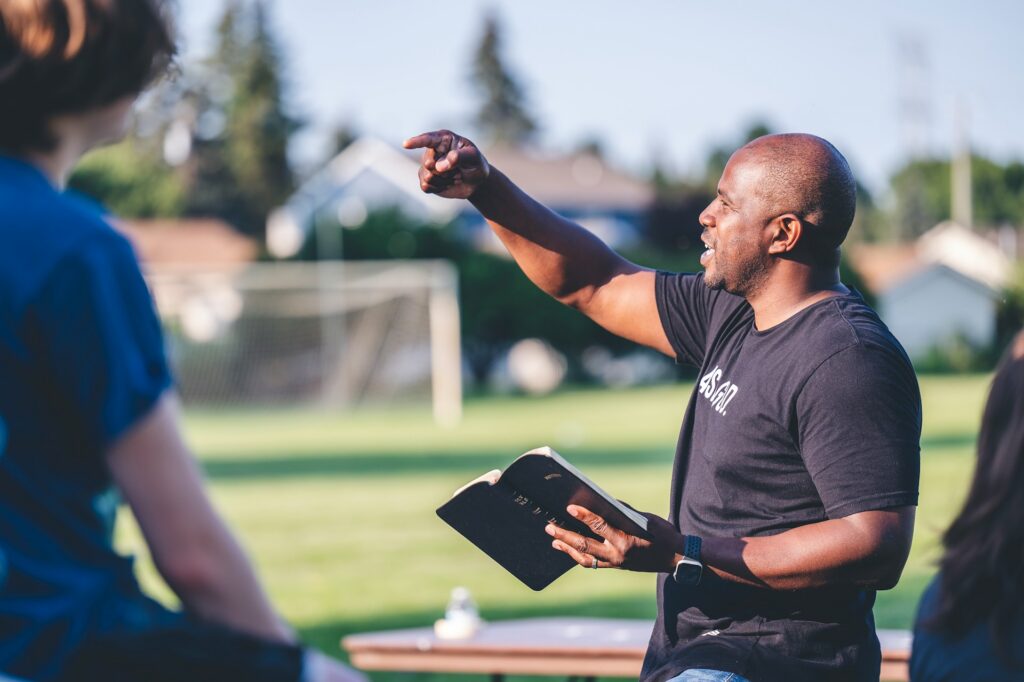
Deep Well Development, Practice #2: Measure Teaching Impact Downwardly
With all due respect, I sometimes caution even the most gifted pastor-teachers:
“Do not overestimate your preaching impact.”
Our value of God’s Word and our personal pride as teachers are admirable. But the assumption that believers receive everything they require for ministry equipping from a staged presentation is a leadership error of consequence.
This is one of those aspects of ministry where humility in a leader matters—and affects the entire congregation.
Most Bible teachers are well-intentioned as they seek to steward their teaching gift for the benefit of the body. But an overinflated view of teaching impact can become like the inverse of a drop landing in a pond and rippling outward.
It can inadvertently hinder what God wills to do in and through the lives of members.
Why Pastors Must Measure Teaching Impact Differently
Not only do we have a retention issue among seated listeners—most remember about 5 percent of a sermon—but the assumption that members develop the practical “know-how” needed in today’s culture simply from listening to a talk is reductionistic.
It leaves out critical content and training members need to fulfill the mission mandate.
Consider the curated wisdom of former Oakland A’s General Manager Billy Beane:
“It’s not what you teach; it’s what they learn.”
Humility in the leader regarding teaching limitations enables a teacher to measure accurately.
And that, in turn, opens a gusher for gospel movement and learning that extends far beyond anything that can happen from a sermon.
I am fully aware that God’s inspired Word in a church service fulfills many wonderful purposes. As Paul reminds us in 2 Timothy 3:16–18, Scripture equips God’s people for every good work.
It draws people forward spiritually in worship.
Provides sound doctrine.
Increases devotion.
Offers life application.
Yet, if the Word is administered primarily in larger gatherings and not for training in the field, mission formation of the members will languish.
The reason is simple:
The learning gap is too wide.
Your members cannot get everything they truly need to be effective for gospel engagement.
They need to learn relational-influence skills. How to:
- Get alongside others.
- Frame meaningful spiritual conversations.
- Read their friend’s deeper needs and storylines.
- Speak the gospel into their personal situation.
- Understand the starting points of people who are far from faith.
- Know how to engage unsaved people for Christ.
In post-Christian, secularized North America, most people on the outside are not merely a nudge or invitation away from faith.
More detailed, hands-on biblical instruction—within a relational structure that supports the learning experience—is necessary.
High-level church leaders realize they must work mission training downward, all the way out to the engagement experiences of their members.
Coaching, input, and feedback go way beyond the sermon.
It is this deep conviction that enables them to elevate the disciple-making efforts of the church.
Go to Grow
The experiential aspect of mission formation is no small point.
Everywhere I speak, I introduce what I call the Relational Evangelism Process, or REP.
It is a field assignment built around getting alongside someone outside the faith.
Sounds easy, right?
Are you surprised to hear that at Talbot Seminary many of our Master of Divinity students do not have close connections with unsaved friends?
Just as church members cannot process everything they need simply by listening to a sermon, I know students will not learn everything from my classroom teaching.
Certain aspects require feel and knowledge gained through engagement itself.
You have to “go to grow,” we say.
Measure Teaching Impact Through Mission Formation
One biblical example of widening your approach is Jesus’ famous call of His disciples in Luke 5.
Two types of teaching are evident.
There is the shoreline teaching—something like what happens in our church services.
And then there is the teaching that occurs when Jesus asks them to “put out to sea.”
Where does the greater formational event occur in that passage?
God wills to show His disciples many things when they go out.
He shows up in their direct relationships with people.
Expands their hearts for the lost.
He strengthens their faith in Him.
Through them, He extends God’s love to the world.
And He sharpens their interactions through experience.
It doesn’t matter how great the pastor’s sermon is.
Sometimes the sermon is the wrong form for achieving the formation we need.
Practical Steps for the Deep-Well Leader
Marry Spiritual Formation with Mission
Jesus does this right from the beginning:
“Follow Me, and I will make you fishers of men.” — Luke 5:10
John also captures the intimacy of a leading Father and a shadowing Son, where everything Jesus does and says flows from this heavenly relationship (John 5:19–20).
The fact that Jesus calls us to assume His same mission assignment is not hidden. It is made quite clear in Scripture.
In the Lord Jesus’ words:
“As the Father has sent me, I am sending you.” — John 20:21
And:
“Whoever believes in Me will do the works I have been doing.” — John 14:12
Teaching and mission cannot remain disconnected.
Spiritual formation should prepare people not merely to know more, but to live and minister more like Jesus.
Teaching Impact Requires Relational Evangelism Training
Teach a Relational Process Model to the Entire Church Body
To raise gospel impact in your church, move beyond the one-hit-wonder “telling paradigm” of evangelism—where believers are expected to share Christ with strangers they happen to encounter or are trained to engage people at doors or malls.
If you need a resource, my book Soul Whisperer walks believers into relational engagement.
Teach them how to:
- Frame meaningful dialogue.
- Deepen connection through authentic disclosure.
- Describe their faith naturally.
- Recognize spiritual openings and faith formation pathways.
If you help people get to the place of being positioned for spiritual influence, you will reach higher numbers.
Healthy churches provide relational-outreach training to all members.
Teach it.
Expect it.
Support it.
And when God uses them—celebrate it lavishly!
Don’t Merely Celebrate Conversions and Baptisms
Celebrate relational engagements as wins.
A gospel conversation is a win.
A new relationship is a win.
A member taking a step toward someone outside the faith is a win.
A believer learning how to listen deeply is a win.
These are the kinds of experiences through which mission formation grows.
Don’t Be Afraid to Rock the Boat!
I exhort church leaders to do something counterintuitive:
Embrace confrontation.
Oooh, I know that sounds terrible on the surface.
I am not suggesting that you give harsh sermons, be rude, or do anything that is un-relational.
Your members are God’s beloved!
My point is this:
Some will not like your vision.
Some will not get on board because you are asking something of them.
Ask!
We, as God’s Church, are no country club.
We are not a cruise ship of spiritual consumers.
The church is a serious body-building environment that leads Christians to become more than they could become without its training.
By moving things downward into the engagement aspects of members’ lives, we are leading them to become more Christlike:
- Sacrificing time.
- Extending themselves for others.
- Showing courage.
- Exercising creativity.
- Living according to the Father’s heart.
- Embracing Christ’s mission mandate.
You are raising Jesus-following gospel influencers.
Coming Next
The third practice in this series will take us from teaching impact to the structures that support a church’s vision.
Because vision alone is not enough.
Coming soon to your inbox.
Ready to Deepen Your Leadership Well?
What if your church could move beyond simply measuring what people hear—and begin strengthening what they actually learn, experience, and do?
Here are a few ways to take the next step:
📘 Learn Relational Evangelism Through Soul Whisperer
Discover a practical relational process that helps believers move beyond attraction and invitation toward meaningful gospel influence.
🎓 Explore Ministry Training Resources
Equip your people with practical tools and experiences that connect spiritual formation with Christ’s mission.
📬 Stay Connected
Join the email list for upcoming leadership insights, training opportunities, and resources to help your people grow as gospel influencers.
EXPLORE SOUL WHISPERER
EXPLORE TRAINING RESOURCES
JOIN THE EMAIL LIST

Be The First To Comment